Book of Dead is one of the most recognizable Egyptian-themed slot experiences in the modern digital gaming industry. Developed around the concept of ancient exploration, hidden tombs, and legendary treasures, the game combines cinematic atmosphere with structured probability mechanics to create a long-term engagement system rather than a simple reel-spinning format.
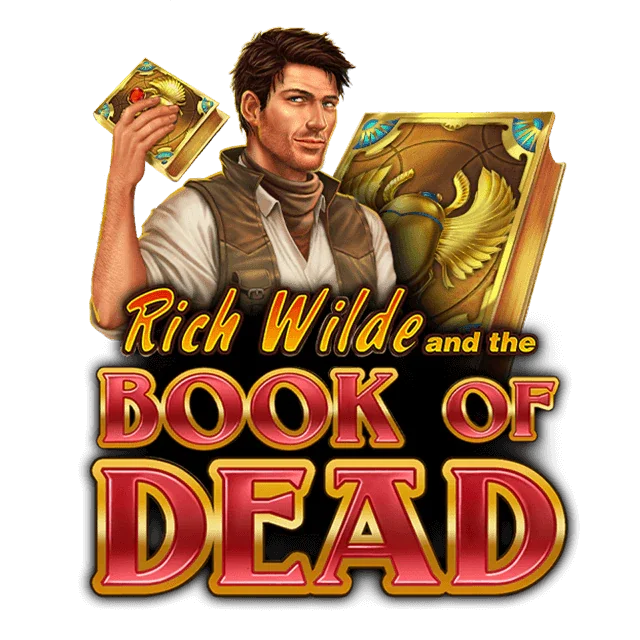
The game follows the fictional explorer Rich Wilde, a treasure hunter traveling through forgotten temples and underground chambers searching for sacred artifacts hidden in ancient Egypt. This narrative framework transforms gameplay into an adventure experience where every spin feels connected to a larger journey through pyramids, relics, and mythological symbols.
Within modern platforms such as Rummy 51, Book of Dead fits naturally into mobile-first entertainment ecosystems because it balances accessibility with deep reward mechanics. Players can begin instantly while still experiencing progression, anticipation, and layered bonus structures over extended sessions.
Unlike traditional arcade-style titles, Book of Dead relies heavily on atmosphere and suspense. The pacing of rewards, the dramatic soundtrack, and the visual transitions between base gameplay and bonus rounds all contribute to an immersive environment that keeps users engaged longer than standard casual experiences.
Egyptian Mythology & Visual Identity
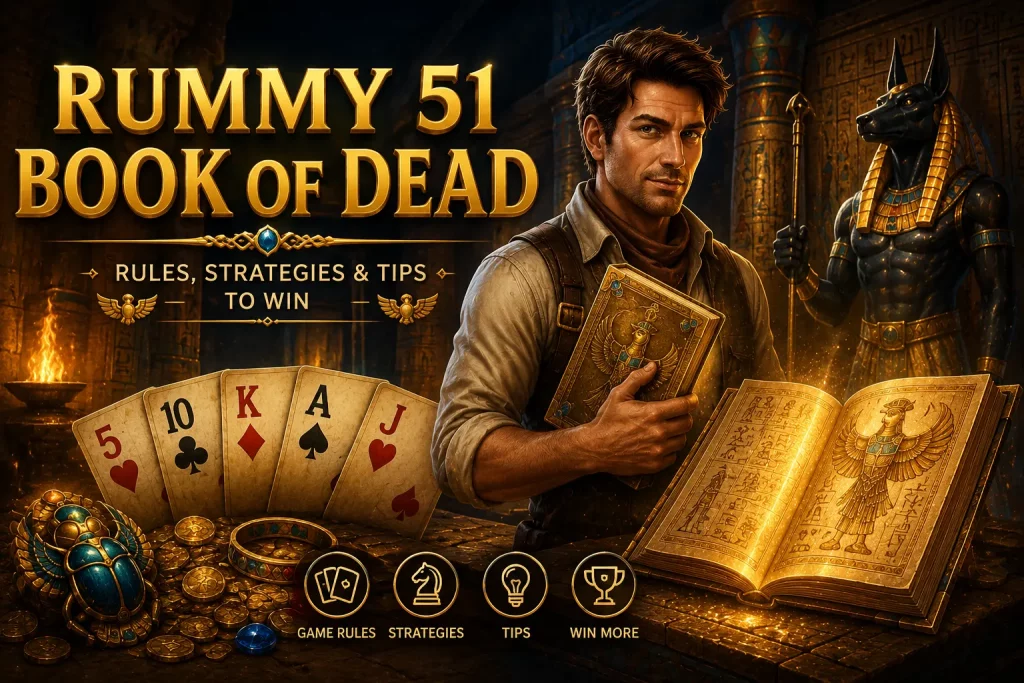
The entire visual identity of Book of Dead is built around ancient Egyptian symbolism. Every icon, animation, and environmental detail is designed to reinforce the feeling of exploration inside sacred ruins.
Symbols include:
- Pharaoh masks
- Scarabs
- Ancient books
- Egyptian gods
- Explorer-themed artifacts
However, these are not merely decorative elements. The symbols are integrated directly into the reward structure and volatility design. Higher-value icons are tied to mythological rarity, while lower-value symbols create gameplay rhythm and consistency.
The “Book” symbol itself is the central mechanic of the entire game. It acts simultaneously as:
- Scatter symbol
- Bonus trigger
- Expanding reward mechanic
This layered functionality is what makes the game structurally unique compared to standard Slots systems.
Gameplay Structure & Reel Mechanics
Book of Dead operates on a five-reel structure with multiple paylines and variable reward states. At first glance the system appears simple, but internally it contains multiple interacting probability layers.
The base gameplay loop consists of:
- Symbol generation
- Payline evaluation
- Bonus condition checks
- Expansion logic during feature rounds
The pacing is intentionally designed to create emotional fluctuation. Long periods of low activity are interrupted by sudden bursts of high-value outcomes, creating a volatility cycle that sustains anticipation.
This system architecture is one of the primary reasons the game maintains popularity across modern mobile gaming platforms.
Mobile Experience & Platform Adaptation
Book of Dead performs especially well on smartphone environments because the game was optimized around fast interaction loops and responsive interfaces.
Modern mobile users expect:
- Quick loading speeds
- Smooth animations
- Stable touch controls
- Efficient battery usage
The game adapts dynamically depending on device performance, ensuring stable operation even on mid-range Android phones commonly used in India.
This mobile optimization is particularly important for users accessing the game through integrated gaming hubs or APK-based installations where lightweight performance significantly improves retention.
Psychological Design & Reward Anticipation
One of the strongest elements of Book of Dead is its use of psychological anticipation. Instead of providing constant rewards, the system creates controlled uncertainty.
This uncertainty works through:
- Near-win visual positioning
- Delayed bonus activation
- Symbol repetition patterns
- Sudden expansion mechanics
The result is a gameplay loop where players remain emotionally engaged even during periods without significant rewards.
This emotional rhythm is intentionally engineered to maximize session duration without making gameplay feel repetitive.
Book of Dead Core Mechanics
| Core System | Function | Gameplay Effect |
|---|---|---|
| 5-Reel Engine | Controls symbol rotation | Defines base gameplay flow |
| Book Symbol | Acts as scatter and wild | Triggers feature rounds |
| Expanding Symbols | Special bonus mechanic | Creates high-payout opportunities |
| Volatility Engine | Controls reward spacing | Increases emotional intensity |
Why Book of Dead Became So Popular
The popularity of Book of Dead is connected to several overlapping factors. First, the Egyptian theme has universal recognition and instantly creates a sense of mystery and exploration. Second, the game uses high volatility to produce memorable win moments, which increases social discussion and replay value.
Most importantly, however, the game succeeds because it combines simplicity with depth. New users can understand the basics immediately, while advanced players remain interested due to the layered reward mechanics and expanding symbol system.
This balance allows the game to appeal to both casual mobile users and experienced digital gaming audiences.
Long-Term Engagement Structure
The game’s engagement model is built around repeat interaction. Sessions are intentionally structured to feel incomplete, encouraging players to return later.
This is achieved through:
- Randomized bonus timing
- Unresolved reward anticipation
- Rare high-value expansion rounds
- Continuous emotional fluctuation
The system never fully resolves tension, which is why retention remains high across long periods.
Early Session Behavior
During the first few minutes of gameplay, Book of Dead usually presents relatively stable symbol behavior with limited high-value events. This creates a baseline expectation before volatility intensifies later in the session.
The gradual escalation of emotional intensity is a deliberate part of the system architecture and plays a major role in sustaining player attention.
The Real Core of Book of Dead
The true identity of Book of Dead begins when the bonus mechanics activate. While the base gameplay creates atmosphere and anticipation, the bonus layer transforms the experience into a high-volatility reward cycle where the potential for major outcomes increases dramatically.
Unlike many standard slot-style systems where bonuses function as isolated mini-games, Book of Dead integrates bonus mechanics directly into the main probability architecture. This means the transition from normal gameplay into feature rounds feels natural and continuous rather than separate.
The entire structure revolves around the legendary “Book” symbol. This symbol is more than a simple icon—it is the centerpiece of the game’s mathematical and emotional design. It simultaneously functions as:
- a scatter trigger,
- a wild replacement,
- and the activation mechanism for free spins.
Because of this layered functionality, the appearance of the Book symbol immediately changes player psychology. Even before a bonus round starts, the symbol itself creates anticipation because users understand its connection to high-value reward states.
How the Free Spins System Works
When enough Book symbols appear simultaneously, the game enters the free spins phase. This mode changes the internal reward environment significantly.
At the beginning of the feature round, one special symbol is randomly selected. This symbol becomes an expanding symbol for the duration of the free spins session. If it lands during gameplay, it can expand vertically across entire reels, dramatically increasing payout potential.
This mechanic is what makes Book of Dead famous among high-volatility game systems. The possibility of multiple full-reel expansions creates moments where rewards escalate extremely quickly.
What makes the system particularly effective is that players never know which symbol will become the expanding symbol. Sometimes the selected icon is low-value, producing moderate outcomes. Other times it becomes one of the rare premium symbols, creating the possibility of extremely large payouts.
This uncertainty is central to the emotional structure of the game.
Reward Tension & Psychological Escalation
Book of Dead uses delayed reward tension as one of its strongest engagement tools. During free spins, every reel movement feels more important because the probability of expansion mechanics is constantly present.
Even when no reward occurs, the player remains focused because each new spin carries potential escalation.
This creates what can be described as “sustained anticipation pressure,” where excitement is maintained continuously rather than only during winning moments.
The pacing of the animations, the sound effects, and the slower reel transitions during bonus rounds are all carefully designed to amplify this emotional intensity.
Mathematical Balance of the Bonus System
From a system perspective, free spins are carefully balanced to maintain volatility without breaking long-term RTP structure.
The game cannot distribute massive rewards too frequently because doing so would destabilize the internal payout economy. Instead, Book of Dead concentrates high-value outcomes into relatively rare but emotionally powerful moments.
This creates:
- long stretches of moderate activity,
- sudden reward spikes,
- and occasional extreme payout events.
The result is a gameplay pattern that feels unpredictable while remaining mathematically controlled underneath.
Free Spins & Bonus Mechanics Breakdown
| Bonus Component | System Function | Gameplay Effect |
|---|---|---|
| Book Symbol | Scatter and wild combination | Activates bonus state |
| Free Spins Mode | Separate high-volatility phase | Increases reward potential |
| Expanding Symbol | Randomly selected icon expands fully | Can trigger massive payouts |
| Volatility Layer | Controls reward spacing | Creates tension and anticipation |
Probability Flow During Bonus Sessions
The probability behavior inside free spins differs from normal gameplay. During this phase, the system temporarily increases the value concentration around expansion mechanics.
This does not mean wins become guaranteed. Instead, the game shifts into a state where fewer events carry significantly higher reward potential.
To better understand this structure, the graph below demonstrates how reward probability changes throughout a typical free spins session.
Expansion Probability During Free Spins
Mobile User Retention & Bonus Psychology
The bonus system also plays a major role in long-term user retention on mobile platforms. Because free spins sessions can produce dramatic outcomes in a short period, they are highly compatible with short mobile play sessions.
This is especially important in India’s mobile gaming market, where users often interact with digital entertainment in brief but repeated sessions throughout the day.
The balance between suspense, expansion mechanics, and volatility is what allows Book of Dead to remain relevant across modern Games ecosystems.
Understanding the Mathematical Engine Behind Book of Dead
Behind the cinematic visuals and ancient Egyptian atmosphere, Book of Dead operates as a carefully balanced mathematical system. Every spin, symbol expansion, and bonus trigger is controlled through a probability engine designed to maintain both unpredictability and long-term statistical balance.
The two most important elements shaping this system are RTP (Return to Player) and volatility. These metrics determine not only how rewards are distributed but also how the player emotionally experiences the game over time.
RTP represents the theoretical percentage of wagered value that returns to players across extremely large numbers of spins. In Book of Dead, this value remains competitive compared to other high-volatility titles, which is one reason the game continues to attract long-session players.
However, RTP alone does not define the experience. The game’s identity is shaped primarily through volatility. Instead of distributing rewards evenly, Book of Dead concentrates value into occasional high-intensity events. This creates a rhythm where long quiet phases are suddenly interrupted by major expansion wins or powerful bonus rounds.
The emotional effect of this structure is extremely important. Players remember the dramatic reward spikes far more strongly than the smaller inactive periods, which increases long-term engagement and replay value.
Why Volatility Feels So Intense
Book of Dead is widely recognized as a high-volatility system because it intentionally delays large rewards. During normal gameplay, many spins may produce minimal or moderate returns. Then suddenly, an expanding symbol sequence during free spins can generate a payout many times larger than previous outcomes.
This contrast creates emotional amplification.
The system is designed so that:
- small wins maintain baseline engagement,
- near misses create anticipation,
- and rare high-value events deliver emotional impact.
Because of this structure, the game often feels dramatic even during periods without rewards. Every spin carries psychological tension because players understand the possibility of sudden escalation.
RTP Convergence & Session Length
One of the most misunderstood concepts in games like Book of Dead is how RTP behaves during short sessions.
Many players incorrectly assume RTP should appear immediately during gameplay. In reality, RTP stabilizes only across extremely long interaction cycles.
For example:
- a short session may perform far above theoretical RTP,
- while another may perform far below it.
This variance is normal and expected within high-volatility systems.
Over time, however, the probability engine gradually converges toward its intended statistical behavior. This process is known as RTP convergence.
The graph later in this section demonstrates how this stabilization works over increasing numbers of spins.
Emotional Timing & Reward Distribution
The timing of rewards inside Book of Dead is carefully engineered. The game avoids constant payout distribution because predictable reward frequency reduces emotional engagement.
Instead, the system spaces rewards irregularly.
This irregular spacing creates:
- uncertainty,
- tension,
- anticipation,
- and emotional release.
The brain responds more strongly to unpredictable reward timing than fixed intervals, which is why high-volatility systems often feel more exciting despite longer inactive phases.
RTP & Volatility System Analysis (
| System Metric | Technical Meaning | Gameplay Impact |
|---|---|---|
| RTP (96.2%) | Long-term payout percentage | Defines theoretical player return |
| High Volatility | Concentrates rewards into rare events | Creates dramatic payout spikes |
| Hit Frequency | Controls how often wins appear | Shapes gameplay rhythm |
| Expansion Mechanics | Full-reel symbol expansion logic | Enables high-value outcomes |
Statistical Behavior Across Long Sessions
From a mathematical perspective, Book of Dead behaves very differently across short and long sessions.
In shorter gameplay periods:
- randomness dominates,
- volatility feels extreme,
- reward distribution appears inconsistent.
As sessions become longer, however, the system gradually stabilizes and begins reflecting theoretical RTP behavior more accurately.
This stabilization is what allows the game to remain mathematically sustainable while still feeling unpredictable to players.
RTP Convergence Over Increasing Spins
Mobile Gaming Ecosystem & Retention
Book of Dead performs especially well in modern mobile gaming environments because its volatility structure matches short-session user behavior.
Mobile players often prefer:
- brief sessions with high excitement potential,
- dramatic visual rewards,
- and unpredictable outcomes.
The game’s architecture supports these preferences perfectly, which explains its continued popularity across mobile-first gaming ecosystems and integrated entertainment platforms.
System-Level Perspective
When analyzed as a whole, Book of Dead functions less like a simple reel game and more like a controlled probability environment designed to regulate emotional pacing.
The visuals, mathematics, reward timing, and volatility all work together to sustain long-term engagement without making outcomes feel predictable.
This balance between randomness and structure is what defines the game’s identity.
Book of Dead is not only a high-volatility entertainment product but also a long-term engagement system built for modern mobile gaming ecosystems. The game combines progression psychology, emotional pacing, and reward timing to maintain user activity across repeated sessions.
What makes the system especially effective is that it does not rely on constant stimulation. Instead, it carefully balances tension and reward. Long inactive phases increase anticipation, while occasional high-value moments create emotional spikes strong enough to encourage players to return later.
This structure is one of the primary reasons why Book of Dead continues to perform strongly across mobile-first platforms and integrated digital gaming environments such as Rummy 51.
Session Design & Retention Psychology
Modern digital entertainment systems are designed around user retention rather than isolated gameplay sessions. Book of Dead follows this philosophy by creating interaction loops that encourage repeated engagement.
The system achieves this through emotional incompleteness. Sessions rarely feel fully “finished.” Even after a bonus round or a major expansion win, players often continue because the system leaves open the possibility of another reward cycle.
This psychological structure is extremely important because anticipation itself becomes part of the entertainment value.
The player is not only reacting to rewards but also to the expectation of potential future rewards.
Why Mobile Users Stay Engaged
Mobile gaming environments require a very specific pacing model. Most smartphone users do not play for several uninterrupted hours. Instead, they engage in short repeated sessions throughout the day.
Book of Dead is highly effective in this format because:
- gameplay begins instantly,
- emotional intensity builds quickly,
- and bonus rounds can deliver dramatic outcomes within minutes.
This creates strong compatibility with modern mobile behavior patterns, especially in India’s rapidly growing smartphone gaming market.
The game’s optimized interface, responsive animations, and lightweight performance also contribute to retention by reducing friction during entry and gameplay transitions.
Reward Cycles & Behavioral Reinforcement
The reward structure inside Book of Dead follows a behavioral reinforcement model commonly used in modern digital systems.
Instead of delivering rewards at predictable intervals, the system distributes them irregularly. This unpredictability increases emotional engagement because the brain responds more strongly to uncertain rewards than fixed patterns.
The process works through several overlapping mechanisms:
- near-win situations maintain attention,
- delayed bonuses create suspense,
- sudden expansion wins produce emotional spikes,
- and quiet periods increase future anticipation.
Together, these mechanics form a continuous engagement cycle that encourages repeated return behavior.
Retention & Ecosystem Systems
| System Layer | Technical Purpose | Effect on Players |
|---|---|---|
| Reward Volatility | Controls pacing of payouts | Creates emotional highs and lows |
| Free Spins System | Introduces high-reward states | Encourages longer sessions |
| Session Progression | Builds anticipation gradually | Increases replay behavior |
| Mobile Optimization | Improves performance on smartphones | Enhances accessibility and retention |
Monetization & Platform Structure
Book of Dead is often integrated into larger gaming ecosystems where monetization is tied to long-term engagement rather than isolated purchases.
Modern gaming platforms typically use systems such as:
- optional progression purchases,
- event-based rewards,
- daily return incentives,
- and premium reward activation.
These systems are designed to extend interaction cycles while maintaining accessibility for casual users.
Importantly, the monetization layer works best when users remain emotionally engaged over long periods. This is why retention mechanics and reward pacing are so heavily connected to platform economics.
Ecosystem Integration & Cross-Platform Engagement
Book of Dead functions especially well inside integrated gaming ecosystems because its reward structure complements other entertainment formats.
Within larger platforms, players often move between:
- card-based systems,
- casual Games,
- competitive modes,
- and high-volatility slot experiences.
This cross-platform movement increases total session duration while preventing fatigue from repetitive gameplay.
The game therefore acts not only as a standalone experience but also as a retention driver inside broader entertainment environments.
Book of Dead succeeds because it combines several layers simultaneously:
- cinematic atmosphere,
- probability-driven mechanics,
- emotional pacing,
- mobile optimization,
- and retention-focused system design.
The game creates the illusion of unpredictability while remaining mathematically controlled underneath. This balance between chaos and structure is what keeps gameplay exciting across repeated sessions.
Rather than relying purely on visual style or rewards, Book of Dead maintains long-term engagement through carefully engineered emotional timing.
That combination of volatility, anticipation, and progression is what allows it to remain one of the most recognizable titles in modern mobile gaming ecosystems.
Book of Dead – FAQ
What is Book of Dead?
Book of Dead is an Egyptian-themed slot-style game inspired by ancient mythology and treasure exploration. The game follows the fictional explorer Rich Wilde as he searches for hidden artifacts and legendary rewards inside ancient temples and pyramids.
The system combines cinematic visuals, high volatility, and free spins mechanics to create an experience focused on suspense and unpredictable rewards.
How does the free spins feature work?
The free spins feature is activated when several Book symbols appear simultaneously on the reels. Once triggered, the game randomly selects one symbol that becomes an expanding symbol during the bonus round.
If this symbol lands during free spins, it can expand across an entire reel, creating the possibility of very large payouts and dramatic reward moments.
Why is Book of Dead considered high volatility?
Book of Dead distributes rewards unevenly. Instead of frequent small payouts, the system concentrates value into occasional high-reward events.
This means players may experience long quiet periods followed by sudden large expansion wins or bonus rounds. This structure creates stronger emotional intensity and anticipation.
What does RTP mean in Book of Dead?
RTP stands for Return to Player. It represents the theoretical percentage of wagered value returned to players over a very large number of spins.
For example, if the RTP is around 96%, the system statistically returns approximately 96% of total wagers over long-term gameplay. However, short sessions can vary significantly because of volatility.
Can players predict bonus rounds or jackpots?
No. Bonus rounds and jackpots are generated through random probability systems. Each spin is independent, meaning previous results do not influence future outcomes.
Although players sometimes feel patterns or timing cycles, these are psychological interpretations rather than predictable mechanics.
Why do players stay engaged for long sessions?
The game uses anticipation-based reward design. Near misses, delayed bonuses, and sudden expansion wins create emotional tension that encourages continued gameplay.
This unpredictability keeps players emotionally invested even during periods without major rewards.
Is Book of Dead optimized for mobile devices?
Yes. The game is designed for modern smartphone environments and adapts dynamically depending on device performance.
This optimization allows smooth gameplay, responsive controls, and stable performance across Android and mobile browser platforms.
Why is Book of Dead popular in mobile gaming ecosystems?
The game combines short-session accessibility with high-intensity reward potential. Players can quickly enter gameplay while still experiencing dramatic bonus moments and long-term progression.
This balance makes it highly effective for modern mobile-first gaming audiences.